Prince William County Public Schools
PWCS remains steadfast in its commitment to sustainability
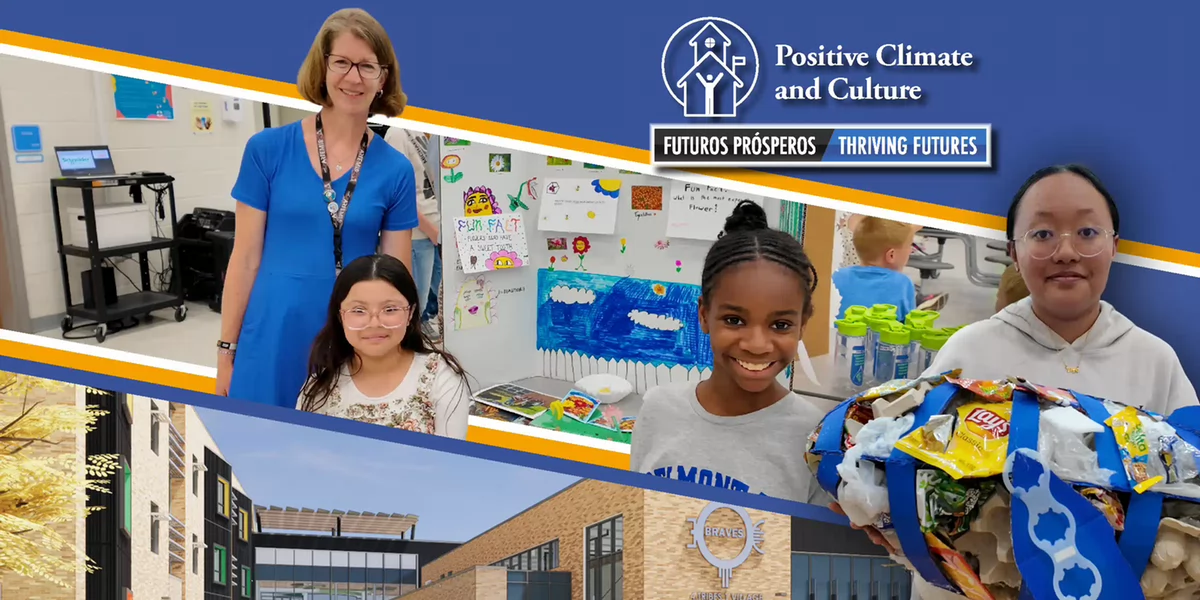 Prince William County Public Schools (PWCS) continues to champion environmental education and sustainability both within the classroom and throughout the broader community.
"In PWCS, our integrated approach to sustainability is transforming school buildings into high-performing spaces that support every learner. Guided by three pillars — efficient infrastructure, resource conservation, and waste reduction — and grounded in sustainability education and environmental literacy, we’re creating school communities where every building supports meaningful learning and reflects our shared commitment to a sustainable future,” Jessica Weimer, supervisor of energy management and sustainability for PWCS, shared.
Numerous PWCS schools have earned prestigious recognition at both the state and national levels. Forest Park High School received the Green Flag Award from the National Wildlife Federation and EcoSchools U.S., honoring its leadership in sustainability education and its impact on the school and surrounding community. In addition, the Virginia Department of Wildlife Resources designated 30 PWCS schools as Virginia Naturally (VAN) schools for the 2024-25 academic year—a 17-school increase from the previous year. This achievement places PWCS at the forefront of all school divisions in the Commonwealth for the highest number of VAN recognitions.
In addition, PWCS has a divisionwide Utility Data Dashboard designed to enhance real-world learning by bringing operational data into the classroom. This interactive tool gives students and educators access to detailed information on the division’s electricity, natural gas, and water usage, along with related greenhouse gas emissions.
Gina Healy, an earth science teacher at C.D. Hylton High School, shared that her students enjoy using the data to see how their school compares to others in the division and gain insight into sustainability practices that are being used in other schools.
“We know here, we use natural gas for our heating and cooling. We know there are other schools that have solar power. We know that other schools have pretty good recycling and composting programs, so we try and make comparisons to see what we can do as a school to make our impact less.”
The division also leads sustainability efforts through the Superintendent’s Advisory Council on Sustainability, comprised of students, staff, and community members. The council provides recommendations to help reduce the division’s carbon footprint, conserve energy, and protect the environment. Its work spans advocating for sustainable design and construction practices, expanding environmental literacy across Pre-K–12 classrooms, and exploring clean energy technologies that enhance building and equipment efficiency.
PWCS is deeply committed to building a sustainable future—one school at a time. In September 2024, PWCS celebrated a major milestone by breaking ground on its first Net-Zero energy school, a landmark achievement that fulfills a key objective of Commitment 2: Positive Climate and Culture in the Strategic Plan. This initiative reflects PWCS’ ongoing dedication to designing environmentally responsible learning environments for current and future generations.
During the 2024-25 school year, 63 schools participated in and earned funding for their sustainability efforts through EcoQuest, PWCS’ annual incentive-based initiative. PWCS also hosted its first-ever Student Environmental Action Showcase (SEAS), an event designed to amplify student voices in environmental problem-solving through student-led projects. The next SEAS will be on Saturday, April 25, 2026. Learn more about how you can get involved with SEAS.