Prince William County Public Schools
Superintendent Presents Fiscal Year 2027 Budget to School Board; 14th High School Construction Canceled
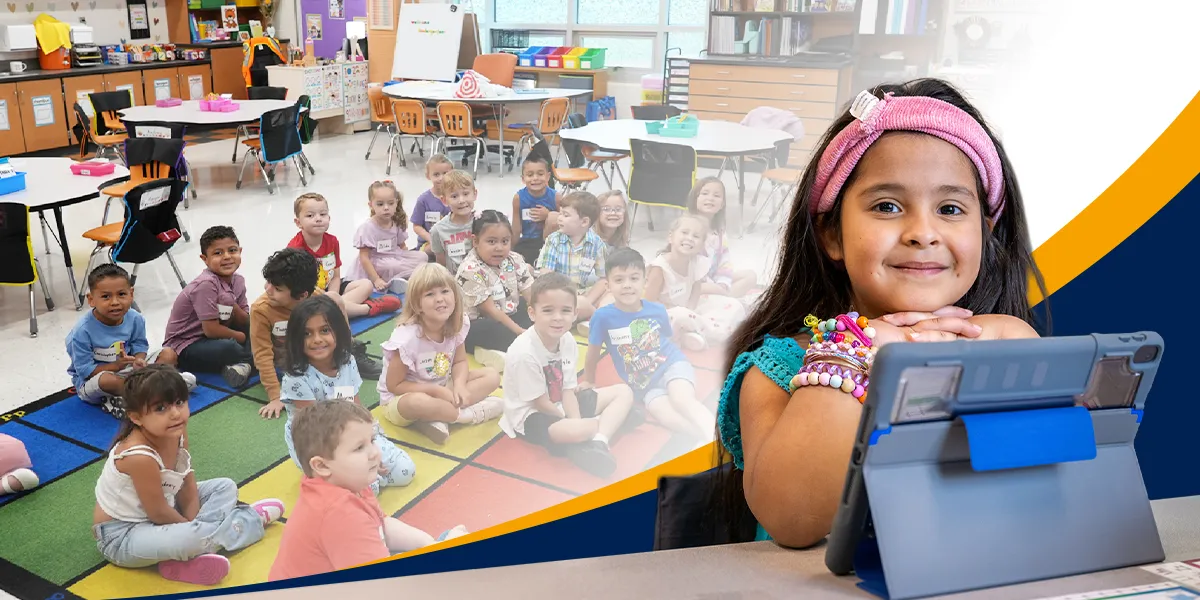
On February 4, 2026, Superintendent Dr. LaTanya D. McDade, Chief Financial Officer Shakeel Yusuf, Chief Human Resources Officer Dr. Donna Eagle, and Chief Operating Officer Vernon Bock presented the proposed Fiscal Year (FY) 2027 Budget and Capital Improvement Program (CIP) to the Prince William County School Board. The proposed operating/debt budget is $2.1 billion.
A key highlight of the FY 2027 budget is funding that directly supports the dedicated teachers and staff who work with students every day, reinforcing the division’s commitment to excellence in education. The proposed budget includes a 6.5% overall average increase for teachers, a 6.2% overall average increase for classified support staff, and a 5.24% overall average increase for administrators.
Beyond compensation, the proposed FY 2027 budget includes $60.8 million in strategic investments across the division’s four core commitments: Learning and Achievement for All, Positive Climate and Culture, Family and Community Engagement, and Organizational Coherence.
Learning and Achievement for All, the division’s most critical commitment, reflects PWCS’ unwavering promise to deliver academic excellence for every student. To advance this priority, the budget proposes $51,614,034 in new strategic initiatives. More than $23 million would support phase I of the division’s universal pre-K rollout. Additional investments would enhance personalized and adaptive learning through augmented and virtual reality technologies, expand services for students with disabilities through the addition of 59 special education teacher assistants, and fully fund summer school programming, among other targeted supports.
To further support student success, $5,510,087 in proposed investments would advance Positive Climate and Culture by fostering safe, supportive, and welcoming learning environments. These investments include five new principal residency positions to strengthen the leadership pipeline, support for environmental sustainability programs, an expansion of international faculty, targeted ninth-grade success initiatives to promote on-time graduation, and enhanced mental health support for staff.
In alignment with the division’s commitment to Family and Community Engagement, $1,761,333 in proposed investments would support the development of a mobile health clinic, a student and family workforce readiness initiative, and enhanced onboarding for new families. Pending approval of the Capital Improvement Program (CIP), an additional proposed $2.5 million would support the implementation of a full-scale health clinic at Gar-Field High School.
The budget also advances Organizational Coherence, with $1,869,165 in proposed investments to strengthen administrative support for temporary and retired employees through the Retirement Opportunity Program (ROP), advance job architecture to support career growth, and prepare for phase one of the Enterprise Resource Planning (ERP) system to modernize technology and upgrade legacy systems. An additional proposed $3.4 million in the Infrastructure Technology Fund would support investments in artificial intelligence, digital equity, and enhanced data dashboards.
During the same February 4 meeting, the School Board voted 7–1 to cancel construction of the 14th high school, citing anticipated divisionwide enrollment declines which no longer support the need for a new facility as well escalating construction costs exceeding $336 million. Some of the resulting cost savings are proposed to be redirected toward other key initiatives, including the construction of robotics centers on the east and west sides of the division, as well as environmental sustainability upgrades such as geothermal systems at Bull Run Middle School and LED lighting installations at multiple schools.
All proposals remain under consideration until the FY 2027 Budget and Capital Improvement Program (CIP) are formally adopted. The next public meeting on the budget and CIP will be held on Monday, February 9, 2026. For more details on the budget process, upcoming public meetings, and opportunities for community input, visit the PWCS website.