Prince William County Public Schools
From cardboard to characters: Freedom High School students bring creativity to life
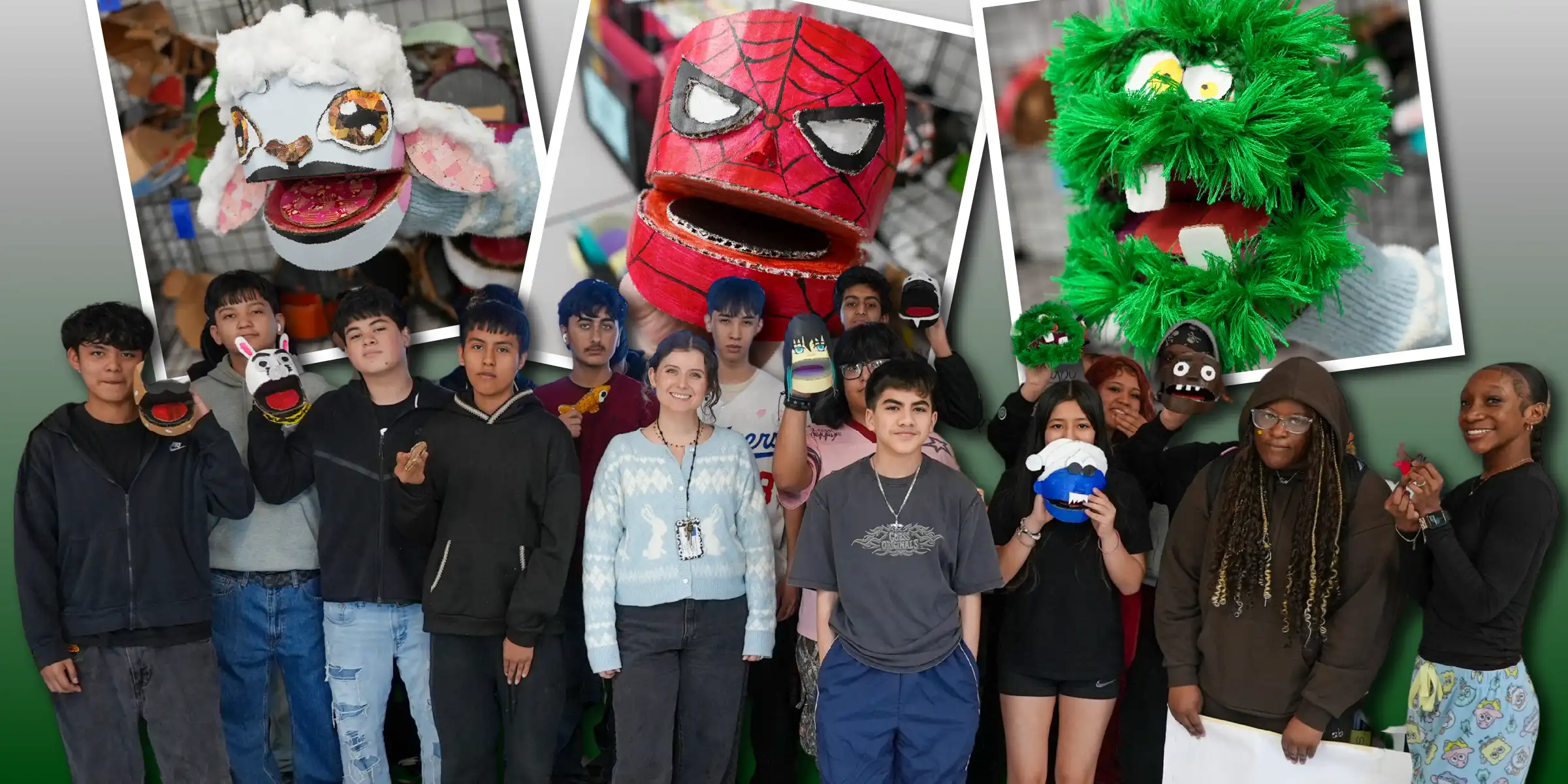 Each March, Youth Art Month shines a spotlight on the importance of visual art education and the role creativity plays in student learning. At Freedom High School, students honored the occasion by turning recycled materials into imaginative, expressive works of art—proving that meaningful creativity can begin with simple materials.
Students began by exploring the art of character design and learning how professionals communicate personality through visual choices. Inspired by legendary creators like Jim Henson, they examined how shape, texture, and movement can be used to bring characters to life while creating puppets made from cardboard.
Students outlined their characters using a “Design Checklist,” ensuring each puppet had a name, a minimum of two eyes, eyebrows, a nose, a tongue, ears, three personality traits, and any additional accessories.
Once their character designs were complete, students began cutting, building, and assembling.
After cutting out each individual piece using the cardboard saw, students assembled their puppets using a hot glue gun.
“It’s really fun to do it!” said Xiomara Henriquez, a ninth-grade student.
Next, it was time to bring their characters to life. One student did so by creating their own pom-poms to glue all over their puppet to create fur.
“I can choose how to make my own patterns and own unique design” said Carlos Reyes, a ninth-grade student.
The project has also sparked a wave of community spirit throughout the school. Teachers and staff rallied together, donating approximately 150 pounds of cardboard from classrooms and offices. So far, 70 pounds of that cardboard have been used to create puppets, demonstrating how everyday waste can be transformed into captivating and engaging works of art.
“One of the things I love about teaching art is showing students that powerful ideas don’t require precious materials. With something as humble as cardboard, they’re learning to think like character designers—using shape, texture, and movement to communicate personality and story,” reflected Darby Smith, art teacher at Freedom. “The real lesson isn’t just the puppet; it’s the problem-solving, critical thinking, and creative decisions that make the work feel intentional. It’s been incredible to see the range of imagination students bring to the project and how quickly cardboard transforms into characters with real personality.”
Looking ahead, students will take their puppets one step further by designing cardboard backgrounds and creating short, 10‑second videos to introduce their characters, bringing their sculptures into a narrative setting.
Through this project, students do more than create art—they craft stories and gain a deeper for the ways creativity, sustainability, and personal expression connect.