Prince William County Public Schools
Buckland Mills Elementary School Students Grow Conflict-Resolution Skills
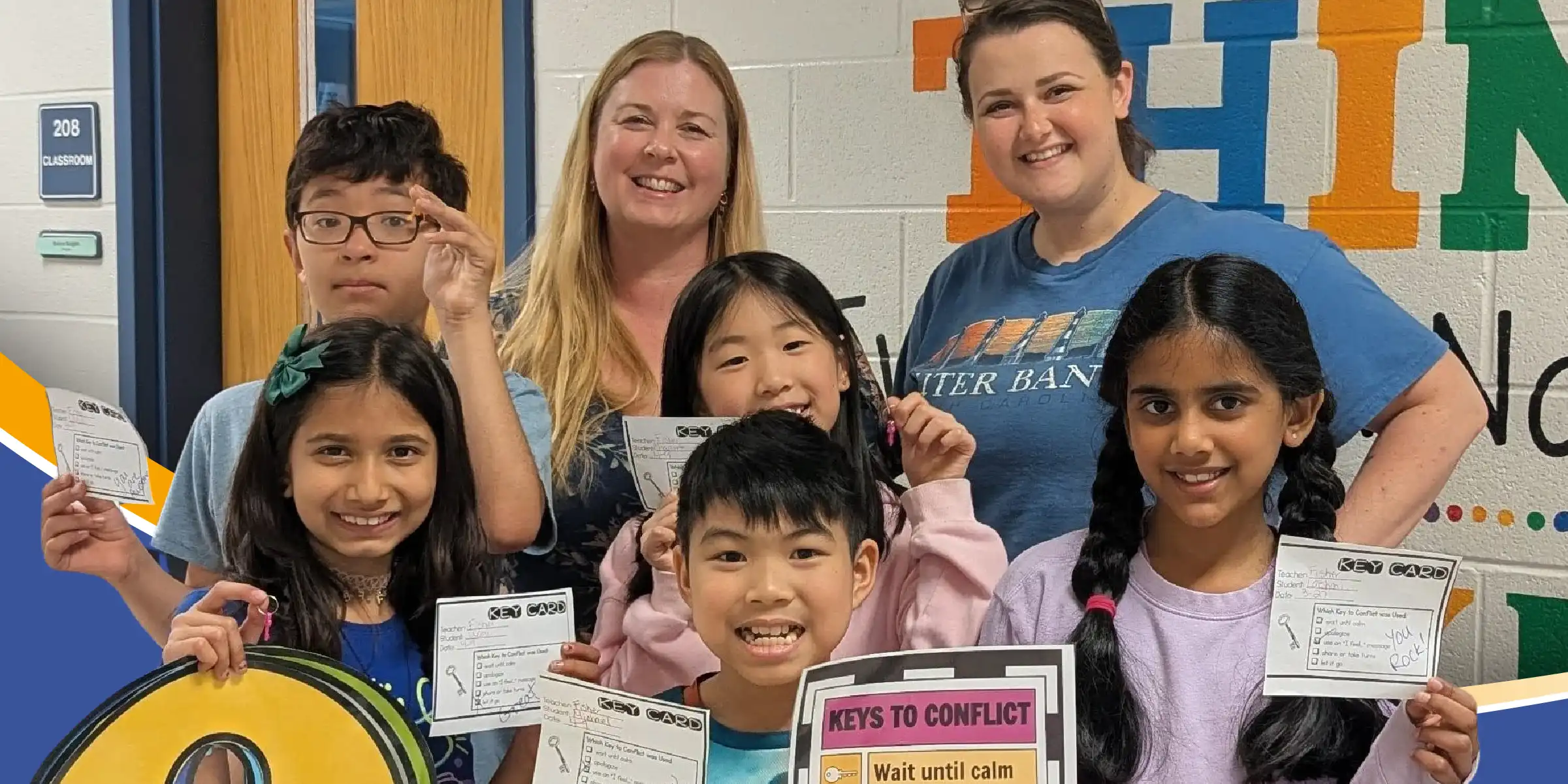
At Buckland Mills Elementary School, student voice is driving positive change. What began as honest feedback from students about feeling unsure how to handle conflict has led to a schoolwide shift in how problems are addressed and resolved.
After learning that many students did not feel confident in their conflict-resolution skills, Brittany Brown, school counselor, developed Keys to Conflict, a schoolwide K–5 initiative designed to equip students with practical tools and a shared language for problem-solving. The program empowers students to navigate disagreements thoughtfully and supports a culture of respect and accountability.
Introduced this school year by the counseling team, “Keys to Conflict” is reinforced by both teachers and counselors. To ensure consistency and visibility, posters outlining the strategies are displayed in every classroom across the school.
“Through our consistent use of the Keys to Conflict strategies, students are learning how to listen actively, express their feelings respectfully, and work collaboratively to resolve disagreements,” shared Minaxi Odedra, principal of Buckland Mills.
“We are seeing students apply these skills independently—using clear communication, empathy, and problem-solving to navigate challenges. As a result, conflicts are being resolved more thoughtfully, and relationships across our school community are growing stronger and more positive each day,” she added.
Students who demonstrate strong conflict-resolution skills can be recognized by any staff member through a Key Card. Students bring their Key Card to a counselor to receive a small key charm for their backpack, serving as both recognition and motivation. Earlier in the year, students who earned Key Cards were also invited to participate in a special “Glow Lunch,” where students ate in a classroom with glowsticks and neon decorations.
Since implementation, Keys to Conflict has established a common language that supports collaboration among students, teachers, and counselors. As a result, peer conflicts have decreased by 5% compared to last year, highlighting the positive impact of consistent expectations, shared strategies, and student-centered recognition.