Prince William County Public Schools
McAuliffe Elementary School Students Lead Schoolwide Sustainability
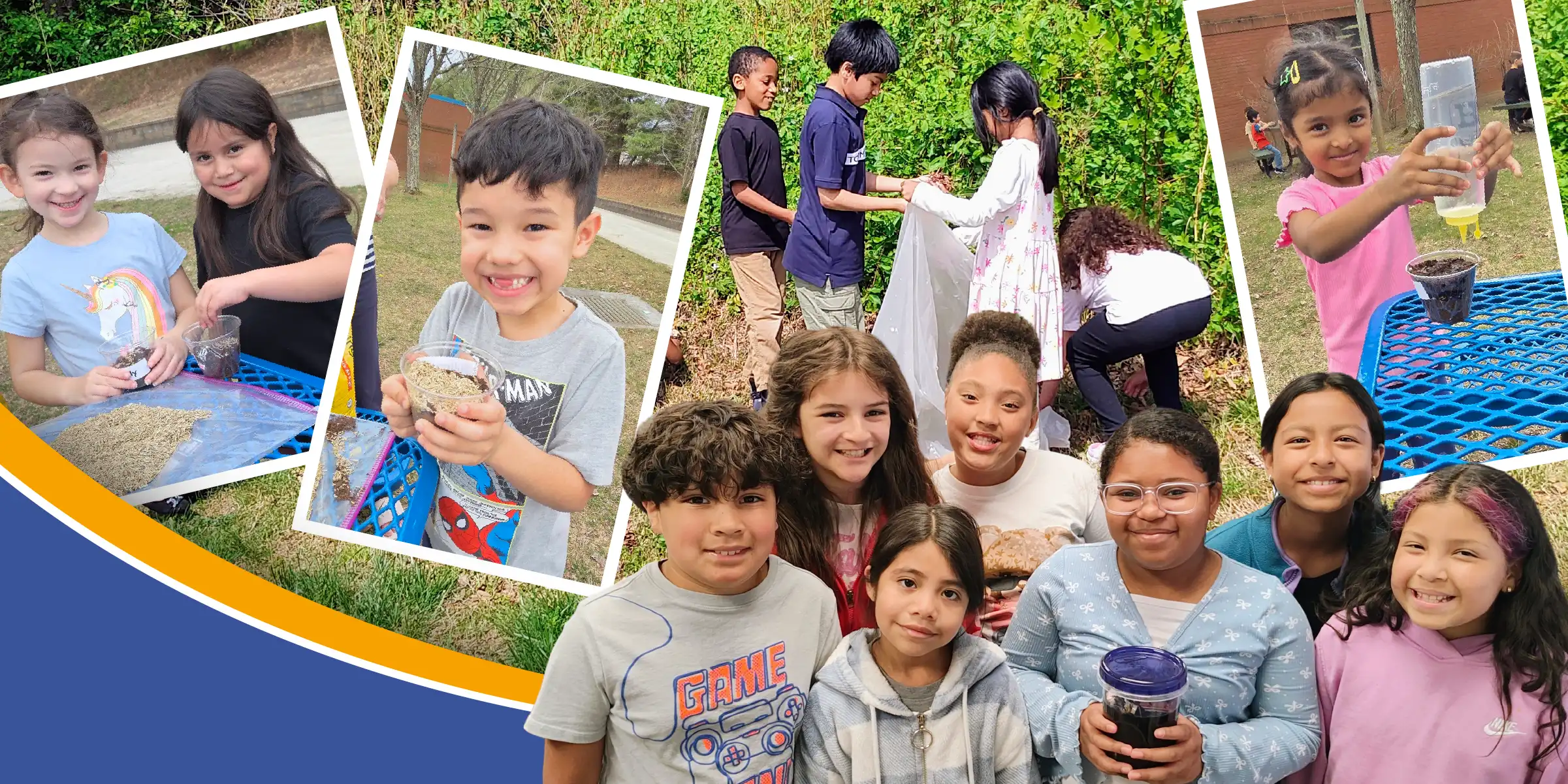 Sustainability took root in every classroom at McAuliffe Elementary School this year, as all 376 students became part of a dynamic, schoolwide EcoTeam.
EcoTeam was embedded into library classes so that every student could participate, resulting in the largest EcoTeam in the county.
Janice Herritt, principal of McAuliffe Elementary, highlighted the impact of this model, sharing, “It ensured equitable access for all students, allowing every learner the opportunity to participate. The experience helped students understand the role of science in everyday life while fostering meaningful, real-world connections across content areas.”
Throughout the year, students engaged in sustainability-focused lessons that paired literature with hands-on activities. Each class developed promises describing how they would positively contribute to the environment. Through discussion, shared experiences, and peer questions, those promises were combined to create the school’s EcoCode, now displayed in the library as a reminder of their collective commitment.
A major focus was understanding “reduce, reuse, and recycle.” Students explored what materials can be recycled, how reusing items reduces waste, and how families already practice sustainability through habits such as thrifting and borrowing materials from the library. Students were introduced to McAuliffe’s makerspace, which is stocked through donations and reusable materials such as cardboard, paper towel rolls, bottles, and caps. Classes also learned about items that require special recycling drop-offs, including batteries and electronics.
In the spring, the library became home to a chicken egg incubation project that excited students across grade levels. Classes observed daily development, candling, and hatching.
Students also learned about soil with support from soil scientist Rachel M. Watters of Texas A&M University. Classes examined soil samples and documented their observations, building background knowledge that later supported the school’s garden project.
As preparation for a Virginia native pollinator garden, students explored books about plants and gardens, then worked with a local gardening expert to select a diverse range of native plants and appropriate soil materials. Students watched the plants grow, helped build a raised bed, used a no-dig soil-building method, and planted and watered the garden together.
Sustainability learning also extended beyond the library. Fourth graders participated in a wastewater simulation called “Who Polluted the Potomac?” while students in kindergarten through second grade grew grass and beans to observe germination. Students also learned about local wildlife through updates on the school’s bird boxes, studying how birds create and maintain habitats.
Reflecting on the initiative, Megan Lehr, library media assistant, stated, “[The] EcoTeam has helped foster an even stronger sense of belonging within our school. It has given students the opportunity to work toward a common goal and take pride in the work they do together. Personally, one of my favorite moments was seeing their faces light up when I explained that this was an in-school club hosted in the library and that every student could join. This also gave them something tangible, progress they could see and feel, as they worked together to complete projects, such as our garden.”
Lehr also shared that the initiative played a key role in making learning more engaging and meaningful for students. “Having EcoTeam as part of library also gave us the opportunity to link all of our activities to SOL standards they were already working on in their other classes. It provided extra hands-on activities, opportunities to hear from experts in the field, connections to books we read together in library, and additional class discussions to reinforce what they were learning and connect it to their lives outside of school,” she added.
Through inclusive participation, hands-on learning, and real-world connections, McAuliffe students demonstrated how young learners can take meaningful action to support sustainability as a school community.