Prince William County Public Schools
Technology with Purpose: Supporting Learning in PWCS
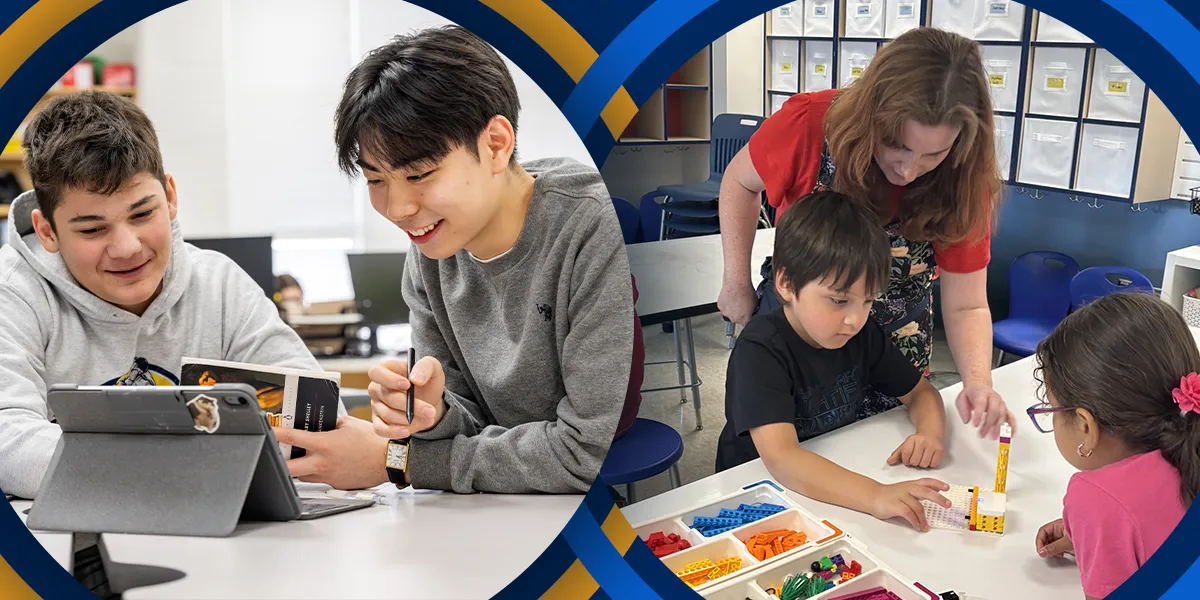 PWCS is committed to ensuring students have the habits of mind to create a thriving future for themselves and their community. This includes every student becoming proficient in core academics, reading, writing, and math, as well as developing the skills necessary in an interconnected technology-driven world. These skills include critical and innovative thinking, entrepreneurialism, and the responsible and ethical use of emerging technologies. PWCS believes students deserve opportunities to develop those skills in meaningful, age-appropriate ways.
In an era when technology is part of daily life, PWCS recognizes that digital tools do not automatically strengthen learning, and technology quotas do not ensure better instruction. The goal is not more or less technology, but better decisions about when and how to use it. Those decisions should begin with the learning need, not the tool—an approach reflected in the recent adoption of Regulation 602-3 Age-Appropriate Classroom Technology Use.
Effective instruction remains grounded in strong relationships between students and teachers, engaging classroom discussions, hands-on experiences, reading, writing, collaboration, and meaningful feedback. Technology can play a role only when its value is determined by purpose, not frequency of use.
This learning-first approach is embedded in the PWCS curriculum and guides instructional technology use in PWCS classrooms. Whether students are conducting research, collaborating with classmates, creating original work, receiving feedback, or exploring complex concepts in new ways, technology is used when it adds educational value and helps deepen learning.
The PWCS approach is rooted in a simple question: Does this tool help students learn knowledge and skills more effectively?
When the answer is yes, technology can be a powerful part of the learning experience. When a non-digital approach is equally effective or more appropriate, teachers use their professional judgment to select the instructional methods that best meet students' needs. Technology is not intended to replace effective teaching, interpersonal interaction, hands-on learning, discussion, or collaborative problem-solving.
Examples of this approach can be found across the division. At Gainesville High School, students have used iPads to research, collaborate, create original work, and engage with content in ways that would otherwise be difficult to accomplish. Students described how digital tools helped them organize their work, participate in classroom discussions, and interact directly with learning materials, while teachers used technology to create more flexible instructional experiences.
Students’ learning needs also evolve as they grow. For young learners, that means prioritizing direct interaction, conversation, movement, play-based learning, print materials, and hands-on exploration. Older students also regularly learn through classroom discussion, collaborative problem-solving, laboratory and hands-on activities, reading from print materials, and writing without digital assistance. Technology enters the learning experience when it offers a meaningful advantage, not simply because a device is available.
PWCS has taken the same thoughtful approach to artificial intelligence. The division adopted a regulation governing the use of AI that emphasizes safety, transparency, ethical use, and human oversight. While AI can be a valuable tool to support learning and productivity, the regulation makes clear that human judgment and professional expertise must remain central to educational and operational decision-making.
At PWCS, the measure of success is not how often technology is used, but whether students are learning, growing, and developing the skills they need for the future.
Technology will continue to evolve, and so will the opportunities available to students. PWCS remains committed to an approach that embraces innovation while staying focused on what matters most: providing students with engaging, meaningful learning experiences that prepare them for success in school and beyond.