Prince William County Public Schools
Chemistry is everywhere: Students discover the science behind everyday life
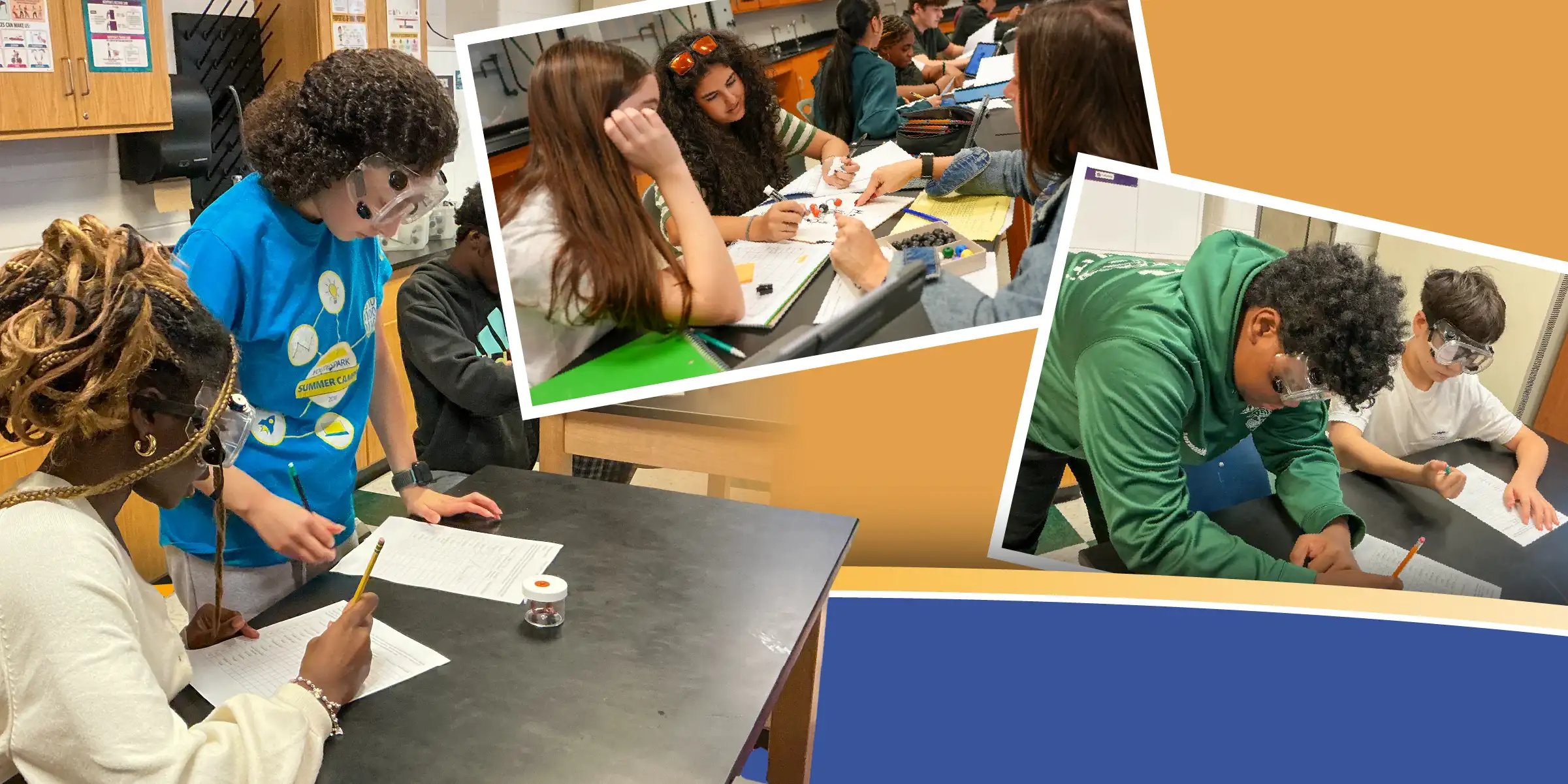 Chemistry is in the buildings around us, the food we eat, the air we breathe, and even in our bodies. During National Chemistry Week, October 18 through 24, students are taking a closer look at how chemistry shapes the world they experience every day.
This year's National Chemistry Week theme, sponsored by the American Chemical Society, explores the chemistry behind building materials such as concrete, steel, glass, and stone. The theme highlights how chemistry helps create strong, safe, and sustainable structures. Those connections extend far beyond buildings.
"Every part of science ties back to chemistry in some way," said Sharon Bicey, an eighth-grade physical science teacher and science department chairperson at Rippon Middle School.
"The chemicals that we have all around us also affect how we live, how we breathe, and how we interact with the world," Bicey said.
As students explore those connections, the elements on the periodic table become more than symbols and numbers.
Maddie, a junior taking advanced chemistry at Charles J. Colgan Sr. High School, said the course has given her a deeper understanding of how chemistry connects to other areas of science and everyday life.
"It's brought in a lot of new ideas and new thoughts about how it's applicable, and not just in this class, but in other classes and other science classes, and also just in real life," Maddie said.
She also finds it fascinating that the same elements can appear in different forms and serve different purposes. Iron, for example, can help support a structure while also playing an important role in the human body.
"It's really cool to think that all of these elements look just like things on a table," Maddie said. She explained that even changing one molecule can make something look or behave differently.
For Bicey, hands-on learning helps students realize they interact with chemistry constantly. They see it when investigating the pH of familiar substances, separating mixtures, or even baking at home.
"When you're baking, you're still doing chemistry," Bicey said.
Helping students make these real-world connections supports the PWCS Elevate 2030 Strategic Plan, which emphasizes inquiry, exploration, and hands-on STEM learning.
From the elements inside our bodies to the materials that form schools, homes, and bridges, chemistry is everywhere. National Chemistry Week gives students an opportunity to look beyond the periodic table and recognize the science that surrounds them every day.