Prince William County Public Schools
1, 2, 3... Bring the energy! Fifth graders put science in motion
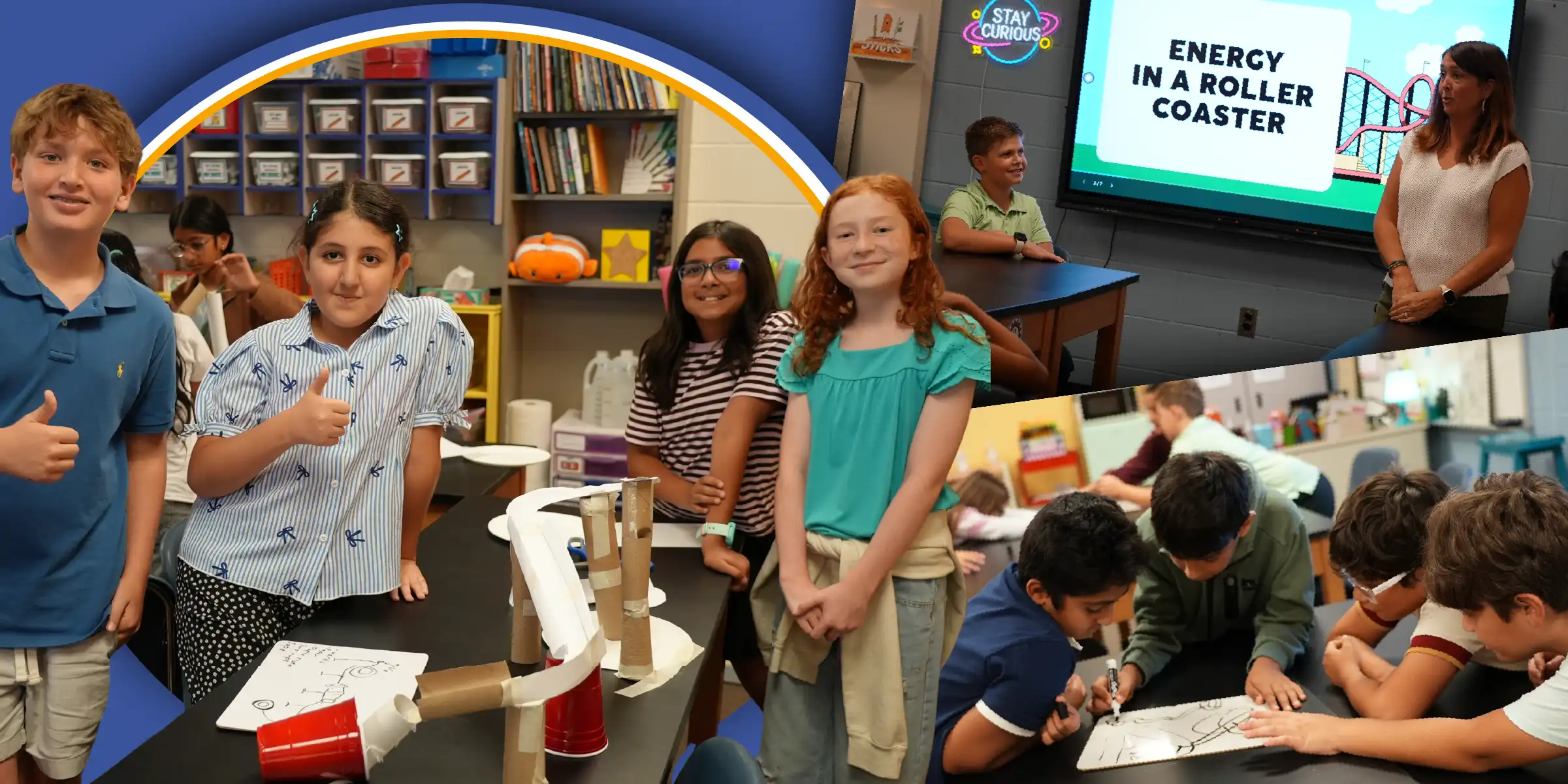 Fifth-grade students at Haymarket Elementary School stepped into the role of engineers during a recent STEAM lesson focused on designing and building roller coasters. The hands-on project helped students explore the relationship between potential and kinetic energy and discover how those forces work together to create the thrilling twists, turns, and drops that make roller coasters so exciting.
Using everyday materials such as plastic cups, paper towel rolls, paper plates, and tape, students worked in teams to construct their own roller coaster designs. Their goal was to create a track that would allow a marble to successfully travel from start to finish.
Before construction began, each group worked together to develop a design plan, determine their approach, and gather the supplies needed to bring their vision to life. As they tested and refined their creations, students applied science concepts while practicing critical problem-solving skills.
This is the first year Haymarket Elementary has offered a STEAM class, and teacher Amy Hale said the roller coaster project teaches students much more than science. While some groups ultimately succeeded in getting their marble to complete the course, she emphasized that the real value lies in the process.
“I'm hopeful that with memorable, low-risk, hands-on experiences that include mistakes, failures, and successes, students learn to persevere, take chances, and use their creativity to solve problems. I want to make them into confident problem solvers,” Hale said.
Throughout the challenge, students learned the importance of teamwork, communication, resilience, and adapting their designs when things did not go as planned.
Not only do the lessons apply inside the classroom, but Hale said the principles of potential and kinetic energy can also be seen in everyday life.
“These concepts are part of everyday life, from riding a bike and playing sports to using playground equipment,” Hale said. “Learning about energy also builds critical thinking and helps students understand more advanced science topics later on.”
By combining science, creativity, and collaboration, the roller coaster challenge gave students an engaging way to see energy in action, proving that some of the most powerful learning experiences happen when students are encouraged to experiment, innovate, and keep trying.